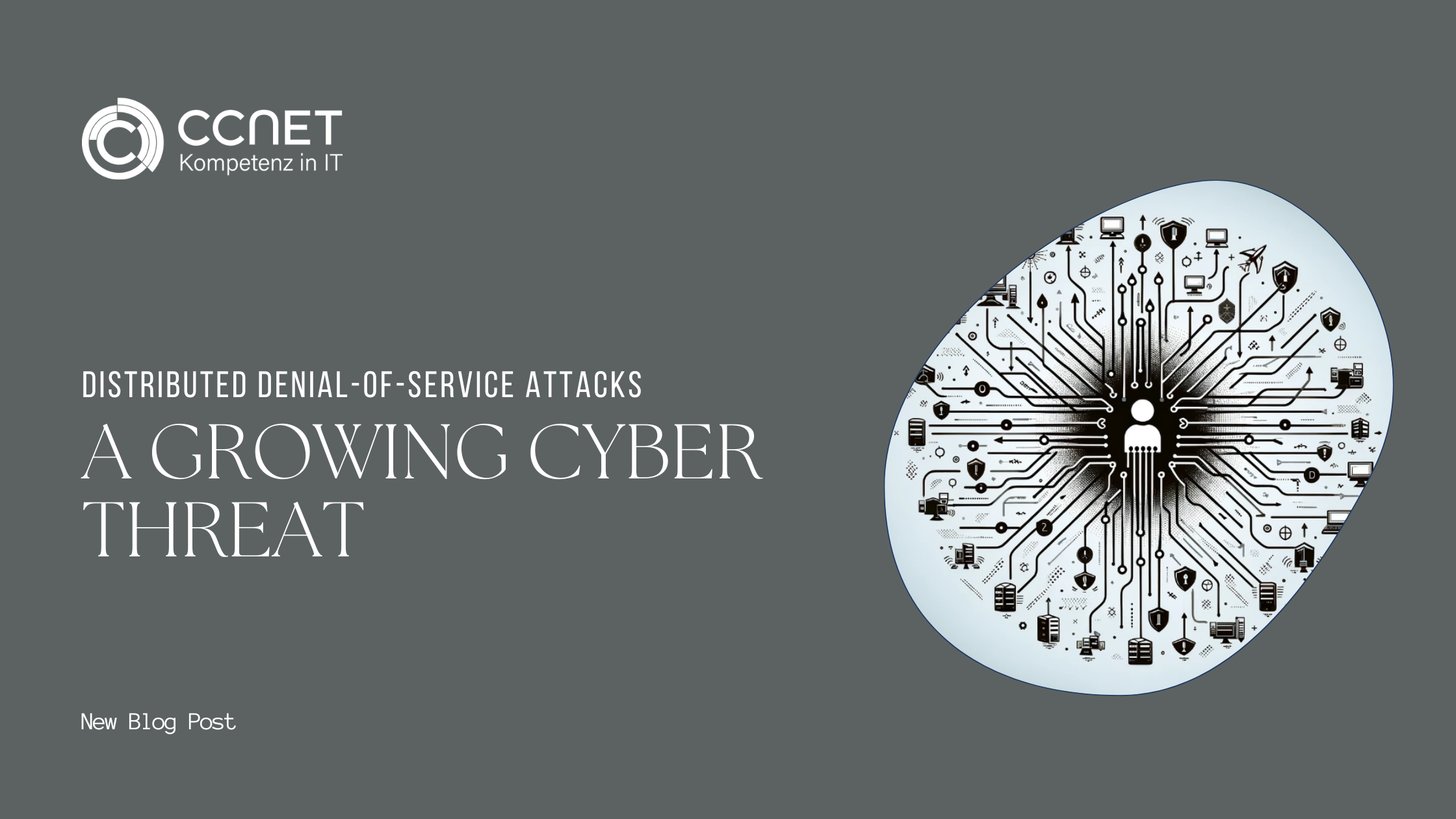
Denial-of-Service (DoS) attacks have become a growing ubiquitous threat to the availability of internet services. Even more concerning is the rise of Distributed Denial-of-Service (DDoS) attacks , where multiple systems are coordinated to cripple websites and internet services. These attacks inundate web servers with requests until the services collapse under the load and become inaccessible.
Further information can be found here: IT-Security
The Mechanics Behind DDoS Attacks
DDoS attacks are feared not only for their ability to temporarily render services unavailable but also for their versatility. They can be executed by individuals or groups with motivations ranging from simple vandalism to more complex goals such as extortion or political activism. In some cases, DDoS attacks are even employed to distract from other, more sophisticated cyber threats , such as ransomware or Advanced Persistent Threats (APTs).
Objectives and Consequences of DDoS Attacks
The objectives of DDoS attacks are diverse. Besides directly extorting victims for financial gain to halt the attacks, some attackers use this technique to harm competitors or convey political messages. The consequences of such attacks vary from financial losses for online retailers unable to operate during an attack to reputational damage and a loss of trust in critical services when, for instance, banks or law enforcement agencies are affected.
Measurement and Trends of DDoS Attacks
The number of reported DDoS attacks in Germany can be measured through a specific index. An example is an index value of 95 points in February 2023, indicating that the number of DDoS attacks in that month corresponded to 95% of the 2021 annual average. Particularly noteworthy is the decline in DDoS activities compared to earlier periods, suggesting more effective combatting and prevention of these attacks. Initial projections in Q1 of 2024, however, show a renewed increase to approximately 105%.
The Impact of Hacktivism
In the context of ongoing conflicts, DDoS attacks have been utilized as a tool for politically motivated hacktivism. These attacks aimed to sow societal unrest and undermine confidence in the state’s ability to protect and provide for the population. Although such attacks typically cause minimal material damage, their ability to garner public attention and convey political messages should not be underestimated.
Conclusion
DDoS attacks pose a significant threat to the security and availability of online services. While the motivations behind these attacks may vary, the potential extent of damage, especially concerning societal unrest and loss of trust, is considerable. Developing strategies for the mitigation and prevention of DDoS attacks remains a central challenge for cybersecurity experts , governments, and businesses worldwide. It is crucial for all stakeholders to collaborate in enhancing resilience against these and other cyber threats.
What is a DDoS attack and how does it work?
A DDoS attack deliberately overwhelms servers or networks with massive data traffic, usually controlled by a botnet, to make services unavailable.
What technical tools help defend against DDoS attacks?
Measures include CDNs, load balancers, automated responses, redundancy systems, and specialized security solutions for detection and mitigation.
Why are DDoS attacks so dangerous for businesses and public institutions?
They can cause financial losses, reputational damage, and loss of trust—especially if critical services like banks or emergency services are affected.
How do attackers use DDoS in conjunction with other cyberattacks?
DDoS attacks are often used as distractions to carry out more complex attacks like ransomware or APTs unnoticed.
What role does hacktivism play in DDoS attacks?
Politically motivated groups use DDoS to gain attention and influence public institutions or opinions—usually without economic goals.
What do current trends in DDoS activity in Germany show?
After a brief decline, activities are estimated to increase again in 2024, indicating a continued high threat level.
Why is collaboration essential in defending against DDoS attacks?
Only joint strategies involving companies, service providers, and authorities can sustainably strengthen resilience against DDoS and similar attacks.